
Morning: Amir gets ready to sell his gold
Amir wakes up thinking about the little gold ring he inherited. Today he plans to visit a local pawn shop to find out how much do pawn shops pay for gold. Before he leaves, he takes a few minutes to check the item and gather simple paperwork to speed up the process.
Check purity and weight
Amir looks for hallmarks or stamps like 916 (22K) or 375 (9K) to confirm purity. If there is no stamp, the pawn shop will test it, but knowing the stamped karat helps him estimate its melt value.
Gather paperwork and clean the item
He brings any receipts or certificates and gives the ring a gentle clean. A tidy item makes a better first impression and can help the staff assess condition faster. Related source: AIENB.
Midday: Visiting the pawn shop and appraisal
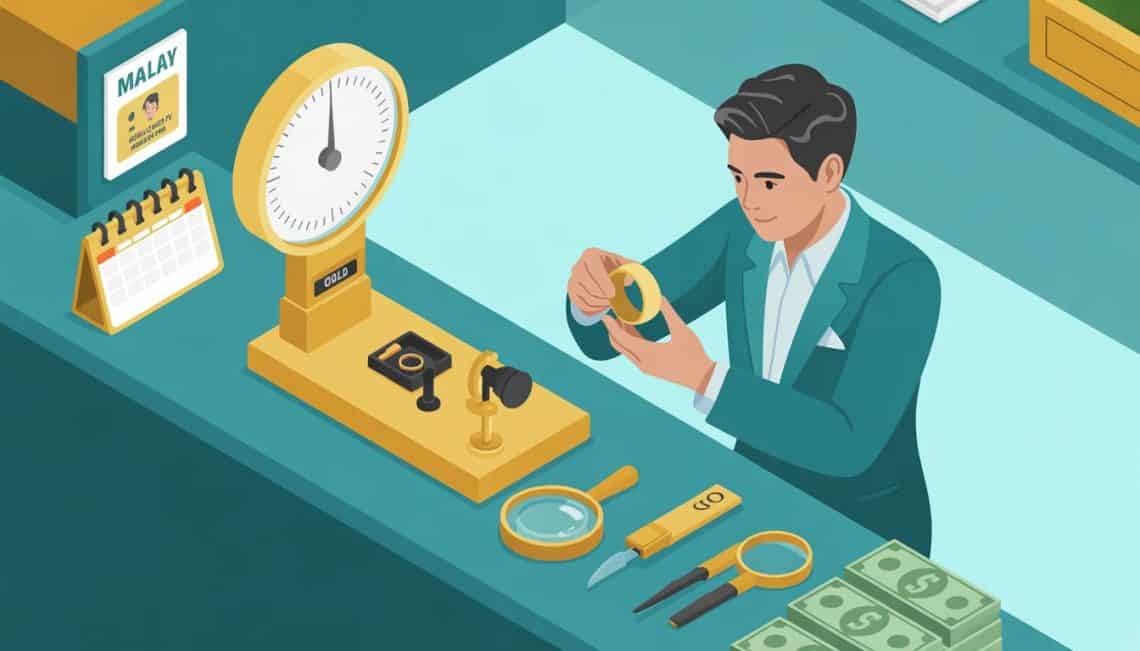
At the pawn shop, Amir watches how the staff examines his gold. The visit is quick but methodical: measurement, purity test, and a check of current gold prices before an offer is made.
Testing and evaluation
The shop may use an electronic tester, acid test, or XRF to determine karat and weight. They also inspect for stones, craftsmanship, and any wear that affects resale or melt value.
Understanding spot price and shop margins
The offer also depends on the current spot price and the shop’s margin, which helps cover operating costs and profit. That margin is why offers are below the raw melt value of the metal.
Afternoon: The offer — how much pawn shops pay for gold
When the manager gives Amir a number, he learns the key factors that determine the payout. The figure depends on weight, purity, spot price, and the shop’s payout policy that day.
Typical payout ranges and a simple calculation
Pawn shops commonly pay a percentage of the gold’s melt value. A reasonable range to expect is roughly 40% to 70% of melt value for outright purchases, although percentages vary by shop and local market. To estimate an offer: multiply weight (in grams) by purity (as a decimal) by the spot price per gram, then apply the shop’s payout percentage. For example, if the spot price is RM 250/gram, a 10 g item at 18K (0.75 purity) has a melt value of 10 g × 0.75 × RM 250 = RM 1,875. At a 60% payout, the cash offer would be about RM 1,125.
Differences between selling outright and pawning
If Amir chooses a pawn loan instead of selling, the shop offers a loan amount lower than their purchase offer because the item serves as collateral. Loan advances often range from 30% to 60% of melt value, and interest plus time limits apply if he wants to redeem the item. He can also compare the process with concert outfit ideas for music festivals when he wants a clearer sense of presentation before visiting other shops.
Evening: After the sale — tips, negotiation and red flags
After the transaction, Amir reflects on what went well and what he could do next time. He also considers whether the offer matched local expectations and whether he explored all options.
Negotiate and compare multiple quotes
Amir could have visited two or three shops to compare offers. Friendly negotiation is normal: showing competing quotes or asking for a slightly higher payout sometimes improves the final number.
Common red flags and better alternatives
He notes red flags such as shops that refuse to show how they weigh or test items, or those giving extremely low offers without explanation. Alternatives include going to a reputable jeweller for a buyback, selling through a certified gold buyer, or waiting for better gold prices if not in urgent need of cash.